
第1課Lesson 1 of 16
The five vowels
Katakana spells the same sounds as hiragana with sharper, straighter strokes. It is the script of borrowed words, and every syllable in those words still rests on these five vowels.
アイウエオ
All lessonsPronunciation
How it sounds
The vowels sound exactly as they do in hiragana: a as in father, i as in machine, u as in flute, e as in bet, o as in more. Keep each one short and steady. A borrowed word is said with these sounds, not its English ones, so air becomes エア, e-a.
Reading tips
Easy to mix up
ー is the long vowel mark. It holds the sound before it for an extra beat: オー is ō. Katakana uses it constantly, and you'll see it in the example words from here on.
ウ and ア both start with a line across the top. ウ has a short tick above it and a short stem on the left.
イ and ア both sweep down to the left. ア has a bar across the top; イ doesn't.
New kana
Picture each shape, then say it.
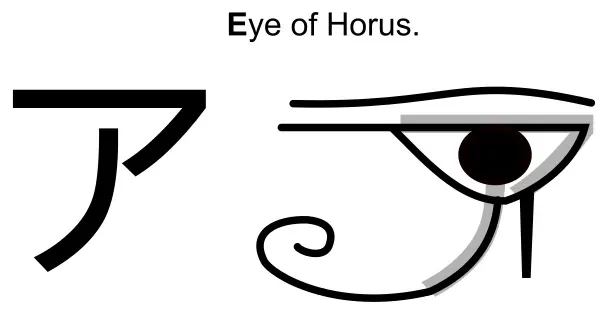
The Eye of Horus. Take the start of "eye" and you have "ah".
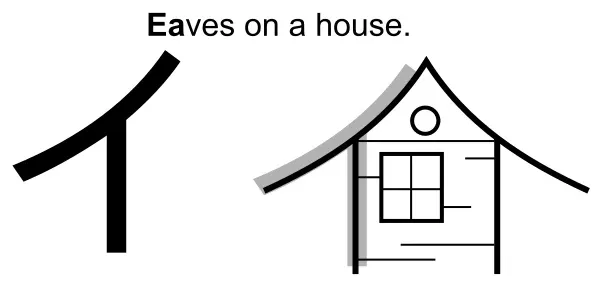
Eaves on a house, with the kana as the roof and wall. Say "ee".
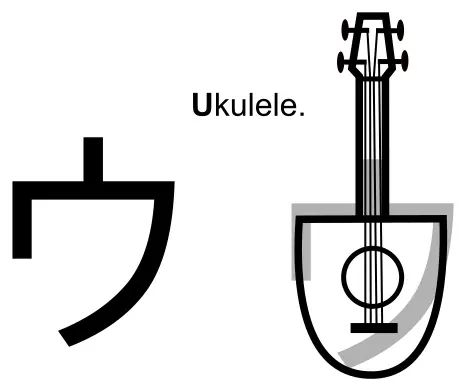
A Ukulele, with the kana as its neck and body. Say "oo".
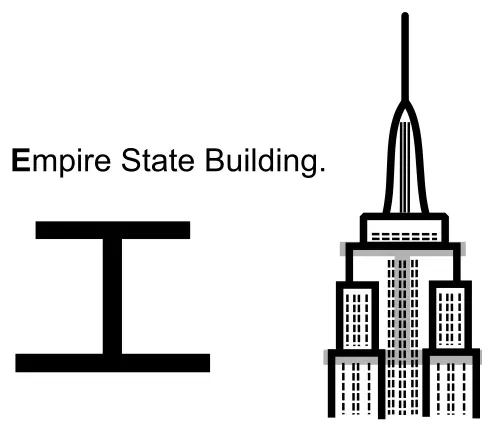
The Empire State Building: a wide base, a wide top, and a straight tower between them.
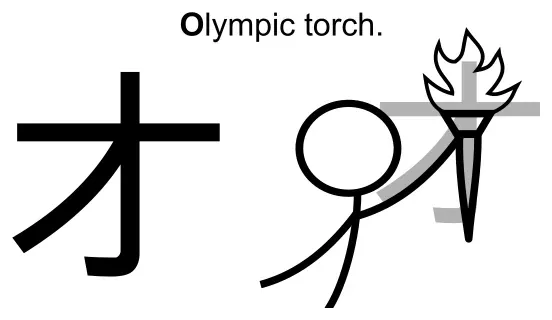
An Olympic torch, held up by a runner mid-stride.
Real vocabulary
Words you can read now
- エアeaair
- ウエアueasportswear
- アイaiAI, eye
- アイアイaiaiaye-aye (a lemur)
- オーōoh!